
Written by: Patrick Cusick, President, WITS Experiential
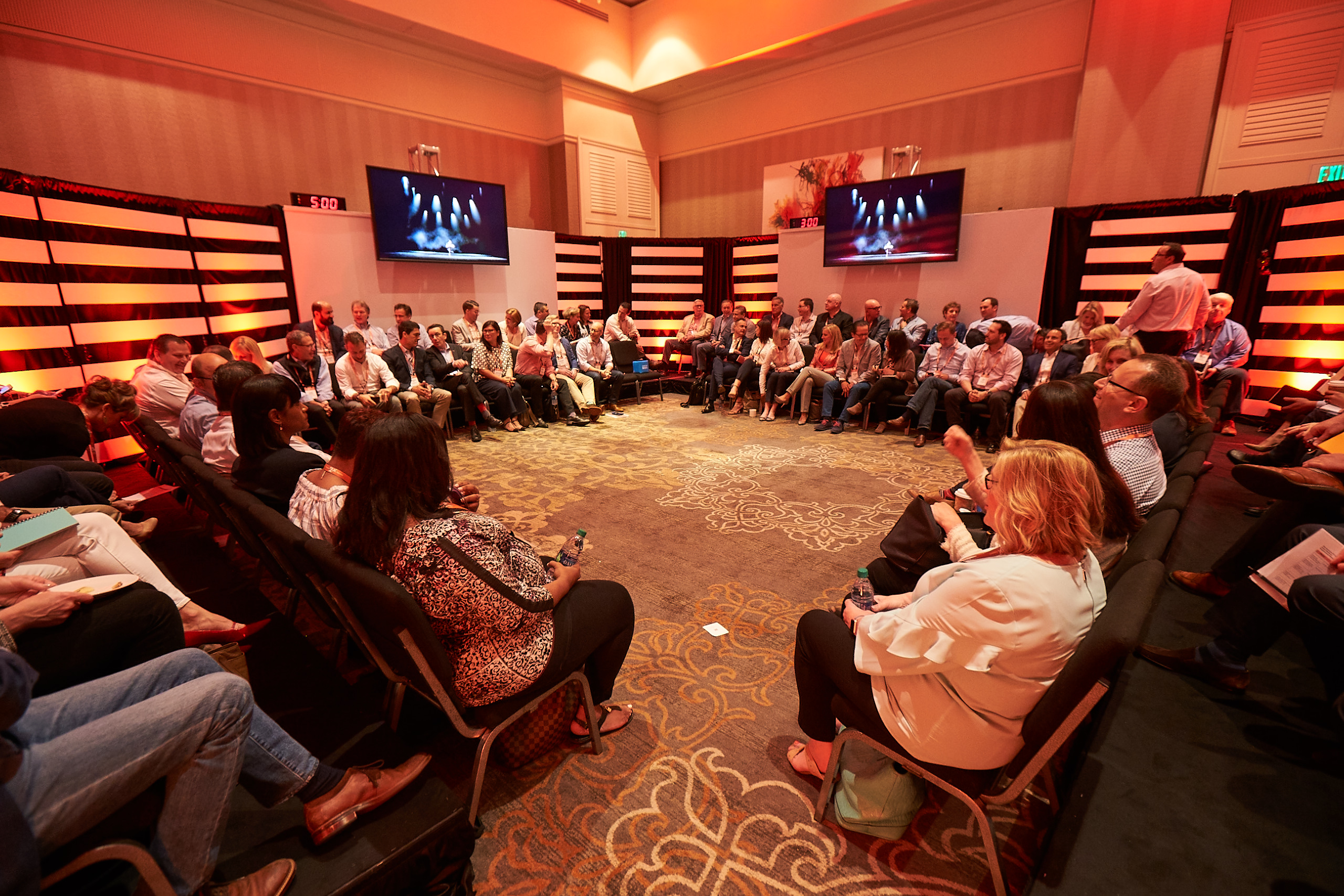
Roughly 400 investor days are held across North America each year. According to research cited by the National Investor Relations Institute, investors rate only about a third of them as highly effective. The rest get attended, then forgotten, or worse, remembered for the wrong reasons.
That number should give pause to anyone planning one. An investor day isn’t a marketing touchpoint. It’s a credibility test, staged in real time, in front of the audience potentially least willing to give a company the benefit of the doubt.
A Different Kind of Attention
Most corporate events compete for engagement. Executive summits and investor days compete for something scarcer: trust. The room isn’t there to be entertained. It’s there to evaluate whether leadership’s confidence in the business is warranted, and every choice in the room, deliberate or not, becomes evidence.
Executive meeting load has followed a dramatic arc: from under 10 hours a week in the 1960s, to a widely cited peak of nearly 23 hours a week by 2017, to more than 21 hours during the pandemic in 2021. The trend has since reversed. Data from real calendars now puts C-suite executives at around 11 hours a week in meetings, still more than a quarter of their workweek. That time is closely guarded, and an audience that guards its time doesn’t forgive a wasted hour the way a general conference crowd might. Every minute in the room has to earn its place, or the event itself becomes evidence of poor judgment.
Three Things That Quietly Undermine Confidence
Inconsistent narrative across sessions. When the CEO’s opening framing doesn’t match what the CFO presents an hour later, investors don’t hear two perspectives. They hear a company that isn’t aligned internally. A gap between what leadership says and what the numbers and body language communicate is one of the fastest ways to lose a room that was otherwise inclined to believe the messaging.
Production that draws attention to itself. A slide that won’t advance. A microphone that cuts out. A Q&A that runs over because the schedule was never realistic. None of these is catastrophic on its own. Together, they read as operational looseness, and operational looseness is exactly what an investor day is supposed to disprove.
A room that overcompensates. Investors and senior leaders read elaborate staging and flourishes that don’t fit the audience as insecurity, not confidence. The instinct to impress often works against the goal, especially with an audience that has sat through enough polished pitches to recognize when substance is being padded.
Consider two versions of the same investor day. In one, a technical delay pushes the agenda back fifteen minutes, and the team visibly scrambles to compress the remaining sessions, cutting the Q&A short. In the other, the same delay happens, but the schedule has built-in slack, and the moderator adjusts without the audience noticing a shift. Nothing about the underlying business changed between those two rooms. What changed is what the audience concluded about how well the company handles pressure.
What Actually Builds Confidence in the Room
Align the message before designing the format. Lock the narrative, keep it consistent, and confirm it across every speaker before anyone makes a single logistics decision. Format serves the message; it never leads it.
Design for density, not filler. This audience protects its time, so every session has to justify its place on the agenda. If a segment doesn’t sharpen the story or answer a real question the audience is likely to ask, cut it.
Account for who is actually in the room. Institutional investors, sell-side analysts, and board members arrive with different questions and different thresholds for detail. A single generic agenda rarely satisfies any of them fully. Segmented content, including additional breakout sessions or allowing for targeted one-on-one time, gives each stakeholder the version of the story they came for.
Treat production discipline as part of the message. Precise timing, seamless transitions, and confident execution behind the scenes aren’t aesthetic choices. They’re direct evidence of how well the leadership team runs the business. This is where disciplined live show production stops being a technical concern and becomes a credibility signal in its own right.
Build in real dialogue, not just presentation. The most effective investor days and leadership meetings leave meaningful time for direct exchange, not just a scripted Q&A at the end. Investors and senior stakeholders remember what they were able to ask, not just what they were told.
Rehearse for the room, not just the deck. Walking through slides isn’t rehearsal. Rehearse the transitions, the timing, and how the team handles an unexpected question. The events that run smoothly are the ones where nothing on stage happens for the first time.
Where This Fits in the Broader Event Strategy
Investor days and executive summits shouldn’t be one-off productions handled separately from the rest of a company’s event calendar. The same discipline behind a strong flagship conference applies here, with even less room for error: consistent narrative, intentional pacing, precise execution. Building this thinking into broader corporate and association meetings and events planning means the standard doesn’t reset every time the stakes go up.
The organizations that get this right don’t treat the investor day as a presentation to survive. They treat it as their clearest opportunity all year to show that leadership is in control of the business.
FAQs
What makes an investor day different from a typical corporate event?
The audience is evaluating credibility, not just receiving information. Every element, from narrative consistency to production execution, becomes evidence of how well the company is run, not just what leadership says about it.
How long should an investor day or executive summit run?
Shorter and denser outperforms longer and comprehensive. A tightly run half-day with a clear narrative typically lands better than a full day padded with sessions that don’t sharpen the story.
Who should be involved in planning an investor day?
Investor relations, corporate communications, and executive leadership all need to align on the narrative before anyone makes logistics or format decisions. Lock the message first, or the production ends up amplifying a story that isn’t consistent.
How much rehearsal does an investor day actually need?
More than most teams plan for. Full run-throughs that include transitions, timing, and mock Q&A consistently produce smoother events than rehearsals that only review slides.
What’s the biggest mistake companies make with executive events?
Designing the format before the message is locked. When the narrative isn’t aligned across speakers, no amount of production covers the gap, and overproducing to compensate only makes it more visible. A precisely run, substantive event signals confidence.
When the room is evaluating your leadership, every detail becomes evidence. WITS Experiential brings strategy, storytelling, and execution together so your investor day or leadership summit shows exactly what you came to prove. If one is on your calendar, we’d welcome the conversation.